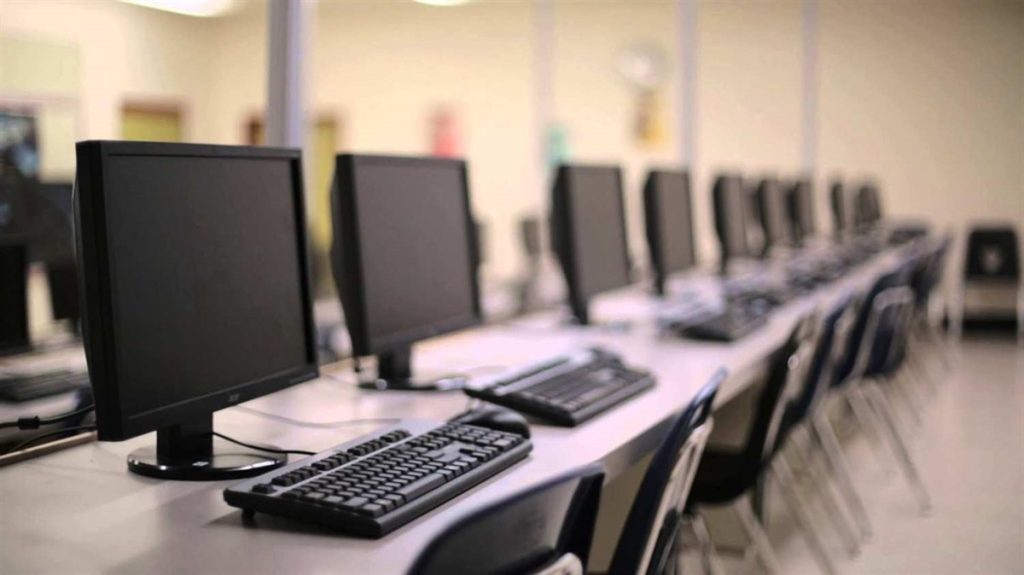
COMPUTER SCIENCE ENGINEERING Uses principles from Computer Science and Electrical Engineering that embodies the science and technology of design widely viewed as “designing computers.”
ABOUT THE DEPARTMENT
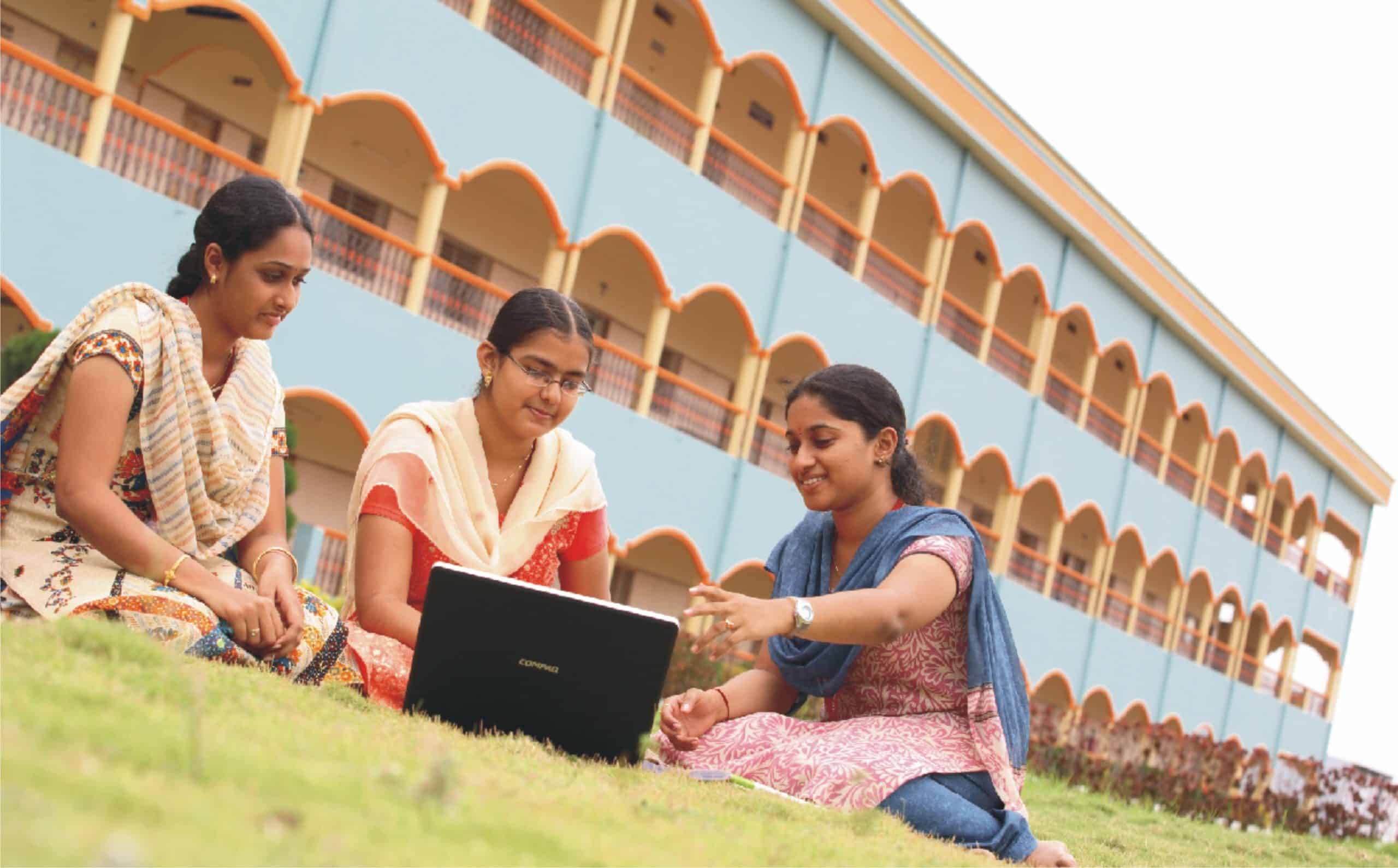
- From a modest beginning in 2001, the Computer Science Department in St. Ann’s College of Engineering & Technology (SACET), Chirala has now grown into a fully integrated department in the field of Engineering and Technology. It is an “education with future”. Learning how to inquire, converse and collaborate, the skill that never go out of date. The objectives of imparting education, combined with creation, dissemination and application of knowledge are being met in an integrated form to create a synergetic impact.

ABOUT HEAD OF THE DEPARTMENT
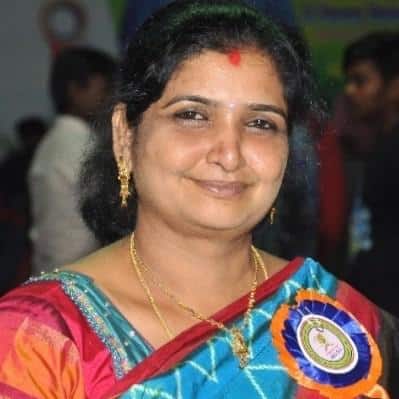
Dr.P.HARINI has received Ph.D in Computer Science and Engineering in 2011 from JNTUA Ananthapur, Andhra Pradesh. She is working as Professor and Head in CSE. she has a total of 27 years of experience in Teaching and Administration.She is ratified by JNTUK, Kakinada. she recueved BEST TEACHER AWARD FOR THE YEAR 2012 FROM JNTUK
VISION
To be a centre of excellence in Computer Science & Engineering, and to produce students with ability to address emerging challenges in global perspective with social concern.
MISSION
- To impart quality education that builds strong computational knowledge and prepares students for global technological demands.
- To develop analytical, design, and research capabilities enabling students to create innovative and sustainable engineering solutions.
- To promote experiential learning through projects, internships, and hands-on exposure to modern tools and technologies.
- To nurture responsible engineers with ethical values, societal awareness, and a commitment to inclusive technological growth.
- To encourage participation in research, consultancy, and community-oriented initiatives that enhance societal impact.
- To encourage continuous professional growth by fostering adaptability, curiosity, and lifelong learning habits.
- PROGRAM EDUCATIONAL OBJECTIVES (PEOs):
- PROGRAM SPECIFIC OUTCOMES (PSOs)
- PROGRAM OUTCOMES (POs)
- Performance Indicatiors
- Faculty
- BOS
PEO1. Apply fundamental knowledge and engineering principles to design, develop, test, and maintain reliable and efficient software systems that meet user and industry requirements.
PEO2: Build and implement software solutions to address needs in research, education, training, and e-governance, contributing to technological and societal advancement.
PEO3: Function effectively as professionals by working collaboratively in teams, using modern tools, standard development environments, and sound project management practices.
PEO4. Engage in lifelong learning, uphold ethical practices, enhance professional skills, and adapt proactively to evolving AI technologies and societal needs.
PSO1: Design, implement, and evaluate software solutions by applying core principles of algorithms, data structures, operating systems, and database technologies to meet specified functional and performance requirements.
PSO2: Analyze and develop intelligent computing systems using computational techniques in artificial intelligence, machine learning, data analytics, and cloud technologies to solve real-world problems.
PSO3: Architect, deploy, and manage secure and scalable computing environments by selecting appropriate tools, platforms, and frameworks for modern software development, networked systems, and enterprise applications.
Engineering Graduates will be able to:
1. Engineering Knowledge : Apply the knowledge of mathematics, science, engineering
fundamentals, and an engineering specialization to the solution of complex engineering
problems.
2. Problem Analysis: Identify, formulate, review research literature, and analyze complex
engineering problems reaching substantiated conclusions using first principles of mathematics,
natural sciences, and engineering sciences.
3. Design/development of solutions: Design solutions for complex engineering problems and
design system components or processes that meet the specified needs with appropriate
consideration for the public health and safety, and the cultural, societal, and environmental
considerations.
4. Conduct investigations of complex problems: Use research-based knowledge and research
methods including design of experiments, analysis and interpretation of data, and synthesis of
the information to provide valid conclusions.
5. Modern tool usage: Create, select, and apply appropriate techniques, resources, and modern
engineering and IT tools including prediction and modeling to complex engineering activities
with an understanding of the limitations.
6. The engineer and society: Apply reasoning informed by the contextual knowledge to assess
societal, health, safety, legal and cultural issues and the consequent responsibilities relevant to
the professional engineering practice.
7. Environment and sustainability: Understand the impact of the professional engineering
solutions in societal and environmental contexts, and demonstrate the knowledge of, and need
for sustainable development.
8. Ethics: Apply ethical principles and commit to professional ethics and responsibilities and norms
of the engineering practice.
9. Individual and team work: Function effectively as an individual, and as a member or leader in
diverse teams, and in multidisciplinary settings.
10. Communication: Communicate effectively on complex engineering activities with the
engineering community and with society at large, such as, being able to comprehend and write
effective reports and design documentation, make effective presentations, and give and receive
clear instructions.
11. Project management and finance: Demonstrate knowledge and understanding of the
engineering and management principles and apply these to one’s own work, as a member and
leader in a team, to manage projects and in multidisciplinary environments.
12. Life-long learning: Recognize the need for, and have the preparation and ability to engage in
independent and life-long learning in the broadest context of technological change.
Program Outcomes - Competencies – Performance Indicators
Program Outcomes -Competencies – Performance Indicators
| PO1: Engineering knowledge: Apply the knowledge of mathematics, science, engineering fundamentals, and an engineering specialization to the solution of complex engineering problems | |||
| Competency | Indicators | ||
1.1
| Demonstrate competence in mathematical modeling. | 1.1.1 | Apply the knowledge of discrete structures, linear algebra, statistics, numerical techniques and theoretical computer science to solve problems |
| 1.1.2 | Apply the concepts of probability, statistics and queuing theory in modeling of computer-based system, data and network protocols. | ||
| 1.2 | Demonstrate competence in basic sciences | 1.2.1 | Apply laws of natural science to an engineering problem |
| 1.3 | Demonstrate competence in engineering fundamentals | 1.3.1 | Apply engineering fundamentals |
| 1.4 | Demonstrate competence in specialized engineering knowledge to the program | 1.4.1 | Apply theory and principles of computer science and information technology to solve an engineering problem. |
| PO2: Problem analysis: Identify, formulate, review research literature, and analyze complex engineering problems reaching substantiated conclusions using first principles of mathematics, natural sciences and engineering sciences | |||
| Competency | Indicators | ||
| 2.1 | Demonstrate an ability to identify and formulate complex engineering problem | 2.1.1 | Evaluate problem statements and identify objectives |
| 2.1.2 | Identifies processes/modules/algorithms of a computer-based system and parameters to solve a problem | ||
| 2.1.3 | Identify mathematical algorithmic knowledge that applies to a given problem | ||
| 2.2 | Demonstrate an ability to formulate a solution plan and methodology for an engineering problem | 2.2.1 | Reframe the computer-based system into interconnected subsystems |
| 2.2.2 | Identifies functionalities and computing resources. | ||
| 2.2.3 | Identify existing solution/methods to solve the problem, including forming justified approximations and assumptions. | ||
| 2.2.4 | Compare and contrast alternative solution/methods to select the best methods. | ||
| 2.3 | Demonstrate an ability to formulate and interpret a model | 2.3.1 | Able to apply computer engineering principles to formulate modules of a system with required applicability and performance. |
| 2.3.2 | Identify design constraints for required performance criteria | ||
| 2.4 | Demonstrate an ability to execute a solution process and analyze results
| 2.4.1 | Applies engineering mathematics to implement the solution. |
| 2.4.2 | Analyze and interpret the results using contemporary tools. | ||
| 2.4.3 | Identify the limitations of the solution and sources/causes. | ||
| 2.4.4 | Arrive at conclusions with respect to the objectives | ||
| PO 3: Design/development of solutions: Design solutions for complex engineering problems and design system components or processes that meet specified needs with appropriate consideration for public health and safety, and the cultural, societal, and environmental | |||
| Competency | Indicators | ||
| 3.1 | Demonstrate an ability to define a complex / open-ended problem in engineering terms | 3.1.1 | Able to define a precise problem statement with objectives and scope |
| 3.1.2 | Able to identify and document system requirements from stake holders | ||
| 3.1.3 | Ability to review state of the art literature to synthesize system requirements. | ||
| 3.1.4 | Ability to choose appropriate quality attributes as defined by ISO/IEC/IEEE standard. | ||
| 3.1.5 | Explore and synthesize system requirements from larger social and professional concerns. Ability to develop software requirement specifications (SRS). | ||
| 3.1.6 | Determine design, objectives, functional requirements and arrive at specifications | ||
| 3.2 | Demonstrate an ability generate a diverse set alternative design solutions | 3.2.1 | Ability to explore design alternatives. |
| 3.2.2 | Ability to produce a variety of potential design solutions suited to meet functional requirements. | ||
| 3.2.3 | Identify suitable nonfunctional requirements for evaluation of alternate design solutions | ||
| 3.3 | Demonstrate an ability to select optimal design scheme for further development | 3.3.1 | Ability to perform systematic evaluation of the degree to which several design concepts meet the criteria |
| 3.3.2 | Consult with domain experts and stakeholders to select candidate engineering design solution for further development | ||
| 3.4 | Demonstrate an ability to advance an engineering design to defined end state | 3.4.1 | Ability to refine architecture design into a detailed design within the existing constraints. |
| 3.4.2 | Ability to implement and integrate the modules. | ||
| 3.4.3 | Ability to verify the functionalities and validate the design. | ||
| PO 4: Conduct investigations of complex problems: Use research-based knowledge and research methods including design of experiments, analysis and interpretation of data, and synthesis of the information to provide valid conclusions. | |||
| Competency | Indicators | ||
| 4.1 | Demonstrate an ability to conduct investigations of technical issues consistent with their level of knowledge and understanding | 4.1.1 | Define a problem for purposes of investigation, its scope and importance |
| 4.1.2 | Ability to choose appropriate procedure/algorithm, data set and test cases. | ||
| 4.1.3 | Ability to choose appropriate hardware/software tools to conduct the experiment | ||
| 4.2 | Demonstrate an ability to design experiments to solve open ended problems | 4.2.1 | Design and develop appropriate procedures/methodologies based on the study objectives |
| 4.3 | Demonstrate an ability to analyze data and reach a valid conclusion | 4.3.1 | Use appropriate procedures, tools and techniques to collect and analyze data |
| 4.3.2 | Critically analyze data for trends and correlations, stating possible errors and limitations. | ||
| 4.3.3 | Represent data (in tabular and/or graphical forms) so as to facilitate analysis and explanation of the data, and drawing of conclusions | ||
| 4.3.4 | Synthesize information and knowledge about the problem from the raw data to reach appropriate conclusions | ||
| PO 5: Modern tool usage: Create, select, and apply appropriate techniques, resources, and modern engineering and IT tools including prediction and modeling to complex engineering activities with an understanding of the limitations. | |||
| Competency | Indicators | ||
| 5.1 | Demonstrate an ability to identify / create modern Engineering tools, techniques and resources | 5.1.1 | Identify modern engineering tools, techniques and resources for engineering activities |
| 5.1.2 | Create/adapt/modify/extend tools and techniques to solve engineering problems | ||
| 5.2 | Demonstrate an ability to select and apply discipline specific tools, techniques and resources | 5.2.1 | Identify the strengths and limitations of tools for (i) acquiring information, (ii) modeling and simulating, (iii) monitoring system performance, and (iv) creating engineering designs. |
| 5.2.2 | Demonstrate proficiency in using discipline specific tools | ||
| 5.3 | Demonstrate an ability to evaluate the suitability and limitations of tools used to solve an engineering problem | 5.3.1 | Discuss limitations and validate tools |
| 5.3.2 | Verify the credibility of results from tool use with reference to the accuracy and limitations | ||
| PO 6: The engineer and society: Apply reasoning informed by the contextual knowledge to assess societal, health, safety, legal and cultural issues and the consequent responsibilities relevant to the professional engineering practice. | |||
| Competency | Indicators | ||
| 6.1 | Demonstrate an ability to describe engineering roles in a broader context, e.g. pertaining to the environment, health, safety, legal and public welfare | 6.1.1 | Identify and describe various engineering roles; particularly as pertains to protection of the public and public interest at global, regional and local level |
| 6.2 | Demonstrate an understanding of professional engineering regulations, legislation and standards | 6.2.1 | Interpret legislation, regulations, codes, and standards relevant to your discipline and explain its contribution to the protection of the public |
| PO 7: Environment and sustainability: Understand the impact of the professional engineering solutions in societal and environmental contexts, and demonstrate the knowledge of, and need for sustainable development. | |||
| Competency | Indicators | ||
| 7.1 | Demonstrate an understanding of the impact of engineering and industrial practices on social, environmental and in economic contexts | 7.1.1 | Identify risks/impacts in the life-cycle of an engineering product or activity |
| 7.1.2 | Understand the relationship between the technical, socio economic and environmental dimensions of sustainability | ||
| 7.2 | Demonstrate an ability to apply principles of sustainable design and development | 7.2.1 | Describe management techniques for sustainable development |
| 7.2.2 | Apply principles of preventive engineering and sustainable development to an engineering activity or product relevant to the discipline | ||
| PO 8: Ethics: Apply ethical principles and commit to professional ethics and responsibilities and norms of the engineering practice. | |||
| Competency | Indicators | ||
| 8.1 | Demonstrate an ability to recognize ethical dilemmas | 8.1.1 | Identify situations of unethical professional conduct and propose ethical alternatives |
| 8.2 | Demonstrate an ability to apply the Code of Ethics | 8.2.1 | Identify tenets of code of ethics given by theprofessional bodies like IEEE. |
| 8.2.2 | Examine and apply moral & ethical principles to known case studies | ||
| PO9: Individual and teamwork: Function effectively as an individual, and as a member or leader in diverse teams, and in multidisciplinary settings. | |||
| Competency | Indicators | ||
| 9.1 | Demonstrate an ability to form a team and define a role for each member | 9.1.1 | Recognize a variety of working and learning preferences; appreciate the value of diversity on a team |
| 9.1.2 | Implement the norms of practice (e.g. rules, roles, charters, agendas, etc.) of effective team work, to accomplish a goal. | ||
| 9.2 | Demonstrate effective individual and team operations- communication, problem solving, conflict resolution and leadership skills | 9.2.1 | Demonstrate effectivecommunication, problem solving, conflict resolution and leadership skills |
| 9.2.2 | Treat other team members respectfully | ||
| 9.2.3 | Listen to other members in difficult situations | ||
| 9.2.4 | Maintain composure in difficult situations | ||
| 9.3 | Demonstrate success in a team based project | 9.3.1 | Present results as a team, with smooth integration of contributions from all individual efforts |
| PO 10: Communication: Communicate effectively on complex engineering activities with the engineering community and with the society at large, such as, being able to comprehend and write effective reports and design documentation, make effective presentations, and give and receive clear instructions | |||
| Competency | Indicators | ||
| 10.1 | Demonstrate an ability to comprehend technical literature and document project work | 10.1.1 | Read, understand and interpret technical and non- technical information |
| 10.1.2 | Produce clear, well-constructed, and well- supported written engineering documents | ||
| 10.1.3 | Create flow in a document or presentation – a logical progression of ideas so that the main point is clear | ||
| 10.2 | Demonstrate competence in listening, speaking, and presentation | 10.2.1 | Listen to and comprehend information, instructions, and viewpoints of others |
| 10.2.2 | Deliver effective oral presentations technical and non- technical audiences | ||
| 10.3 | Demonstrate the ability to integrate different modes of communication | 10.3.1 | Create engineering-standard figures, reports and drawings to complement writing and presentations |
| 10.3.2 | Use a variety of media effectively to convey a message in a document or a presentation | ||
| PO 11: Project management & Finance: demonstrate knowledge and understanding of the engineering and management principles and apply these to one’s own work, as a member and leader in a team, to manage projects and in multidisciplinary environments | |||
| Competency | Indicators | ||
| 11.1 | Demonstrate an ability to evaluate the economic and financial performance of an engineering activity | 11.1.1 | Describe various economic and financial costs/benefits of an engineering activity |
| 11.1.2 | Analyze different forms of financial statements to evaluate the financial status of an engineering project | ||
| 11.2 | Demonstrate an ability to compare and contrast the costs/benefits of alternate proposals for an engineering activity | 11.2.1 | Analyze and select the most appropriate proposal based on economic and financial considerations. |
| 11.3 | Demonstrate an ability to plan/manage an engineering activity within time and budget constraints | 11.3.1 | Identify the tasks required to complete an engineering activity, and the resources required to complete the tasks. |
| 11.3.2 | Use project management tools to schedule an engineering project so it is completed on time and on budget. | ||
| 11.4 | Demonstrate an ability to do financial planning by considering aspects of taxation and investment | 11.4.1 | Ability to prepare financial plan, calculate relevant taxes and propose suitable investment by considering real life constraints |
| PO 12: Life-long learning: Recognize the need for, and have the preparation and ability to engage in independent and life-long learning in the broadest context of technological | |||
| Competency | Indicators | ||
| 12.1 | Demonstrate an ability to identify gaps in knowledge and a strategy to close these gaps
| 12.1.1 | Describe the rationale for requirement for continuing professional development |
| 12.1.2 | Identify deficiencies or gaps in knowledge and demonstrate an ability to source information to close this gap | ||
| 12.2 | Demonstrate an ability to identify changing trends in engineering knowledge and practice | 12.2.1 | Identify historic points of technological advance in engineering that required practitioners to seek education in order to stay current |
| 12.2.2 | Recognize the need and be able to clearly explain why it is vitally important to keep current regarding new developments in your field | ||
| 12.3 | Demonstrate an ability to identify and access sources for new information
| 12.3.1 | Source and comprehend technical literature and other credible sources of information |
| 12.3.2 | Analyze sourced technical and popular information for feasibility, viability, sustainability, etc. | ||
| 12.4 | Demonstrate an attitude to pursue life skills | 12.4.1 | Recognize the need and able to demonstrate life skills that are vitally important for overall development |
| 12.4.2 | Demonstrate an ability to respond in an emergency situation by applying lifesaving skills | ||
| 12.5 | Demonstrate entrepreneur mindset | 12.5.1 | Recognize the importance of entrepreneurship and participate in activities related to business formation |
Faculty Details
| Dept No. | Name of the Faculty | Designation | Highest Qualification |
|---|---|---|---|
| 1 | Dr P HARINI | Professor & Head | Ph.D. |
| 2 | Dr YEZARLA CHITTIBABU | Associate Professor | Ph.D. |
| 3 | Dr AMARTHALURI THIRUPATHAIAH | Associate Professor | Ph.D. |
| 4 | Dr PRASUNA GRANDHI | Associate Professor | Ph.D. |
| 5 | Dr NAGESHBABU DASARI | Associate Professor | Ph.D. |
| 6 | Dr P V SUBBARAMASARMA | Associate Professor | Ph.D. |
| 7 | Dr RATNA RAJU MUKIRI | Associate Professor | Ph.D. |
| 8 | S AMARNATH BABU | Associate Professor | M.Tech. |
| 9 | NEERUKATTU LAKSHMI NARAYANA | Assistant Professor | M.Tech. |
| 10 | MADHURI DRAKSHARAM | Assistant Professor | M.Tech. |
| 11 | TULASI SESHASAI | Assistant Professor | M.Tech. |
| 12 | MAMIDALA ANUSHA | Assistant Professor | M.Tech. |
| 13 | VLN S SWAPNIKA | Assistant Professor | M.Tech. |
| 14 | NARRA SULAKSHNA | Assistant Professor | M.Tech. |
| 15 | SINDHURA PASUPULETI | Assistant Professor | M.Tech. |
| 16 | SURYAKIRANKUMAR KANAPARTHI | Assistant Professor | M.Tech. |
| 17 | KUNCHALA RAMESH | Assistant Professor | M.Tech. |
| 18 | DARA SHYAM BABU | Assistant Professor | M.Tech. |
| 19 | PRAVEENA MUNNANGI | Assistant Professor | M.Tech. |
| 20 | KANCHIBOTLA SAI KRISHNA | Assistant Professor | M.Tech. |
| 21 | YANAMADRI SMILEE | Assistant Professor | M.Tech. |
| 22 | CVC UDAYA BHASKAR | Assistant Professor | M.Tech. |
| 23 | KARRI RAMESH BABU | Assistant Professor | M.Tech. |
| 24 | SHAIK JILANI | Assistant Professor | M.Tech. |
| 25 | MAMIDALA NAGA PADMAJA | Assistant Professor | M.Tech. |
| 26 | SYED ARIFA | Assistant Professor | M.Tech. |
| 27 | DEVARAKONDA SOWMYA | Assistant Professor | M.Tech. |
| 28 | PASUPULETI MADHURI | Assistant Professor | M.Tech. |
| 29 | BANDARU SIVA PAVANI | Assistant Professor | M.Tech. |
| 30 | KOMMANA LAVANYA | Assistant Professor | M.Tech. |
| 31 | ADUSUMALLI LAKSHMI PRIYANKA | Assistant Professor | M.Tech. |
| 32 | GURRALA SRUJAN KUMAR | Assistant Professor | M.Tech. |
| 33 | J RAJYA LAKSHMI | Assistant Professor | M.Tech. |
| 34 | BALA KRISHNA YAKKALA | Assistant Professor | M.Tech. |
| 35 | GUNTI RAJESH | Assistant Professor | M.Tech. |
| 36 | KALLI LAKSHMI SOBHANA | Assistant Professor | M.Tech. |